MAPSUBWAY
Metro map of Rio de Janeiro
A detailed map of the Rio de Janeiro metro in Brazil.
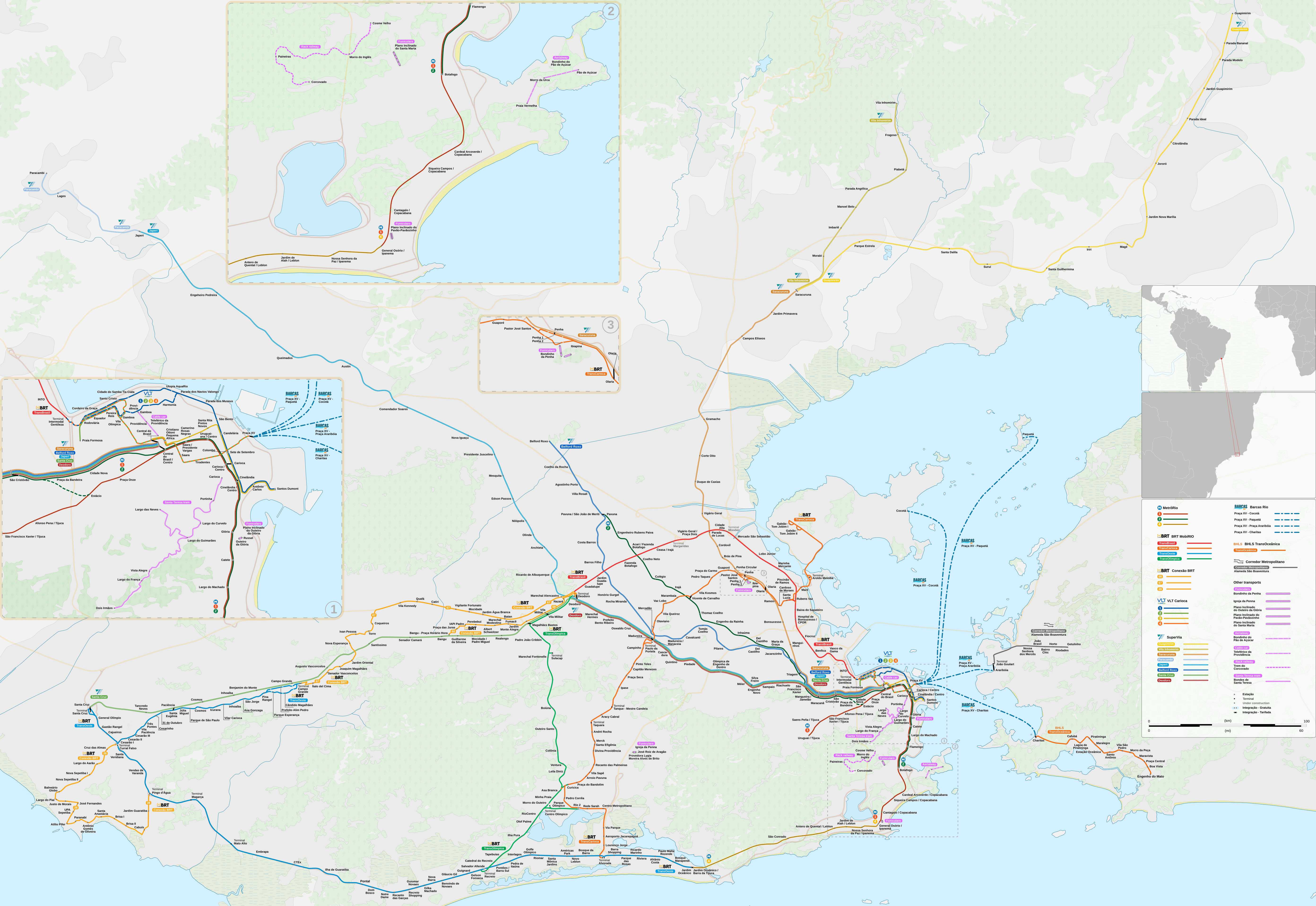
Photo credits (CC BY-SA 4.0) : Goran_tek-en

A large map of the Rio de Janeiro metro in Brazil. A detailed map of the Rio de Janeiro metro with all lines and the names of all metro stations in the city. The map also shows the city's various public transportation options, such as the funicular and cable car.
The Rio de Janeiro Metro, known as MetrôRio, began operations in 1979 with the opening of Line 1 between Glória and Praça Onze. Built to improve transportation in one of Brazil's largest cities, the system gradually expanded to connect downtown Rio with neighborhoods such as Copacabana, Ipanema, Botafogo, Tijuca, and Barra da Tijuca. In 2016, ahead of the Summer Olympic Games, Line 4 opened, providing a direct link between the South Zone and Barra da Tijuca. Today, MetrôRio operates an integrated rapid transit network that carries hundreds of thousands of passengers each day and plays a vital role in Rio de Janeiro's public transportation system.